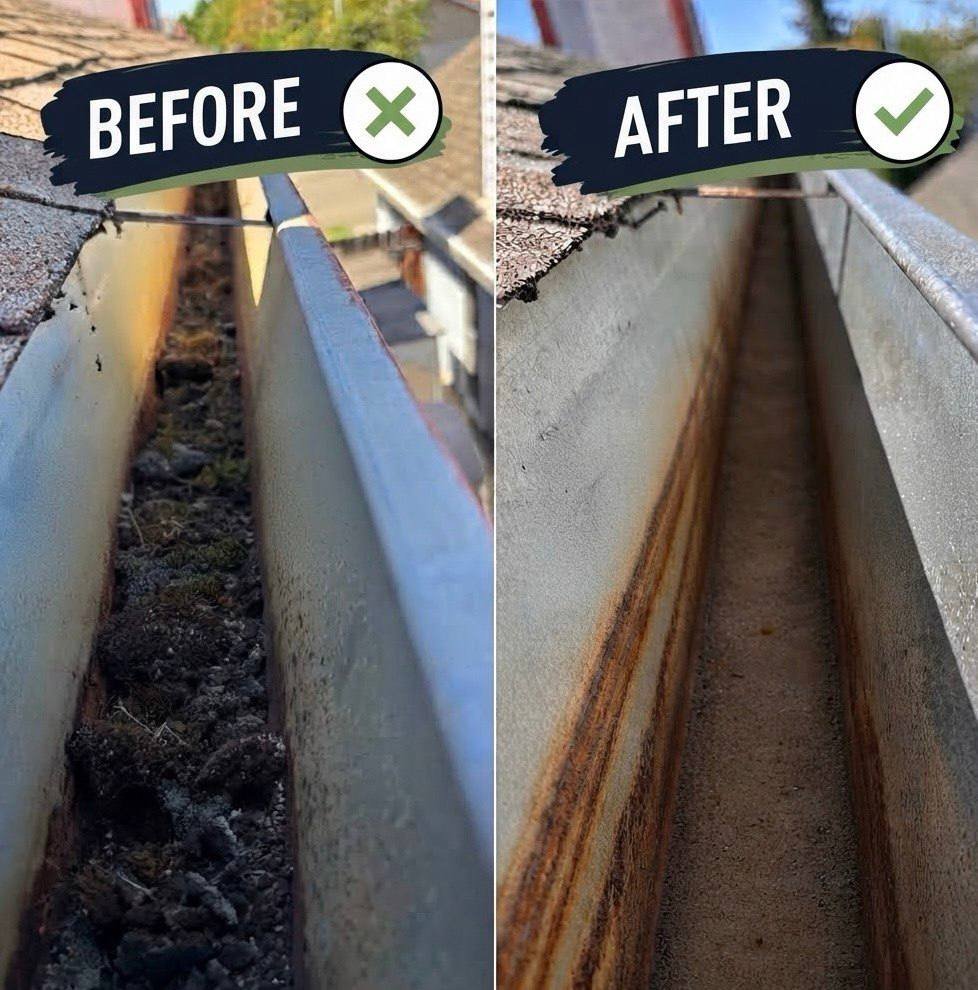
From our work: Gutter Cleaning in Granite Bay, CA
Short answer: Hard-water spots form when droplets evaporate and leave mineral deposits. Repeated overspray or rinsing with mineral-rich water can build a film that is harder to remove than ordinary dust.
What homeowners should know first
Solar panels perform best when light can reach the glass without a persistent layer of dust, pollen, ash, or bird residue. Cleaning must also protect the glass, seals, wiring, and roof. Panel angle, local dust, wildfire ash, birds, irrigation overspray, rain patterns, roof access, and manufacturer guidance determine whether cleaning is worthwhile.
The decision becomes easier when the goal is specific: improve appearance, restore drainage, remove biological growth, reduce a recurring spot, or prepare for maintenance. Each goal may require a different level of work, so describe the problem rather than requesting a tool by name.
How to evaluate the condition
Begin with a ground-level visual check and note where the condition is concentrated. Compare sunny and shaded sides, upper and lower sections, edges, drainage paths, penetrations, landscaping, and areas exposed to sprinklers or trees. Photographs taken from safe locations make it easier to compare changes over time and to request an accurate estimate.
Do not treat color alone as a diagnosis. Dirt, biological growth, minerals, oxidation, coating failure, and permanent material changes can look similar from a distance but respond differently. A small test area and a clear discussion of realistic improvement are more useful than a promise that every mark will disappear.
Safety and surface protection
Panels combine roof access, glass, electrical equipment, and manufacturer requirements. Work during suitable conditions, avoid thermal shock, abrasive tools, high pressure at seals, and contact with wiring. Shut-down procedures and access rules should follow the system documentation.
A careful plan also protects adjacent surfaces. That can include closing windows, identifying outlets and vents, moving fragile items, pre-wetting plants, controlling runoff, using stable access equipment, and keeping people and pets away from the work zone. Weather matters: wind, heat, and direct sun can change dwell time and drying.
What affects the scope and price
Quotes commonly reflect the size of the work area, height, access, material, severity and type of soil, setup time, water availability, protection steps, and whether stain-specific treatment or detailed hand work is needed. Bundling compatible exterior services can reduce duplicated setup, but only when each surface receives the method it actually needs.
A useful estimate states what is included, what is excluded, the expected result, and any condition that could change the plan after inspection. It should distinguish routine cleaning from restoration. The lowest number is not a bargain if it assumes unsafe access, excessive pressure, or an unrealistic outcome.
What to expect from professional service
Expect the contractor to identify the likely stain, explain whether it is removable residue or material change, test when uncertainty exists, and document the starting condition. Improvement may be substantial without being mathematically perfect, especially when contamination has penetrated or etched the surface.
Before work begins, ask who will be on the property, how the area will be protected, and what needs to be moved. Afterward, review the result from safe viewpoints, confirm that drainage and surrounding surfaces are left orderly, and keep any before-and-after photographs for future maintenance decisions.
A practical decision checklist
- Identify the material and its current condition.
- Separate routine soil from organic growth, minerals, oxidation, or permanent damage.
- Consider access and fall risk before deciding on DIY work.
- Ask how plants, paint, seals, fixtures, and runoff will be protected.
- Request a written scope with realistic expectations.
- Use visible condition and inspection findings—not an arbitrary calendar—as the maintenance trigger.
Sacramento-area considerations
Properties around Sacramento can experience long dry periods, airborne dust, pollen, irrigation overspray, tree debris, and intense sun, followed by seasonal rain. Conditions vary substantially between open neighborhoods and shaded lots. Local exposure should shape the maintenance plan; a schedule that works for one home may be unnecessary or too infrequent for another.
For an on-site recommendation, review the Solar Panel Cleaning service or send E2 Cleaning a few clear photographs. Direct inspection is the best way to match the method to the surface and explain what improvement is realistic.
For the complete overview, read the Solar Panel Cleaning guide.
Related guides
- Solar Panel Cleaning: When It Is Worth It, How It Works, and What It Costs
- Do Solar Panels Need Cleaning, or Does Rain Do Enough?
- How Often Should Solar Panels Be Cleaned?
Frequently asked questions
Can I evaluate this from photos?
Photos are useful for an initial recommendation and estimate, especially when they show the full area and close details. Final method and expectations may still change after an on-site condition check.
Is the strongest cleaning method always faster?
No. Excessive pressure or overly aggressive treatment can create damage and extra cleanup. The preferred method is the least aggressive process that can achieve a reasonable result.
Can solar panel cleaning be combined with another service?
Often yes, when access and protection steps overlap. Each surface should still be evaluated separately so the correct method is used and the written scope remains clear.
Request a free exterior cleaning estimate
Share a few details and photos. We will follow up with a clear next step.